The Volunteers Who Defend the Cats of Old San Juan
Every evening, just before sunset, a golf cart rolls down the Paseo del Morro in Old San Juan. It carries cat food, fresh water, and at least one volunteer who has been doing this for years, working it around a day job, a family, and the particular kind of exhaustion that comes from loving something that the federal government has decided to take away.
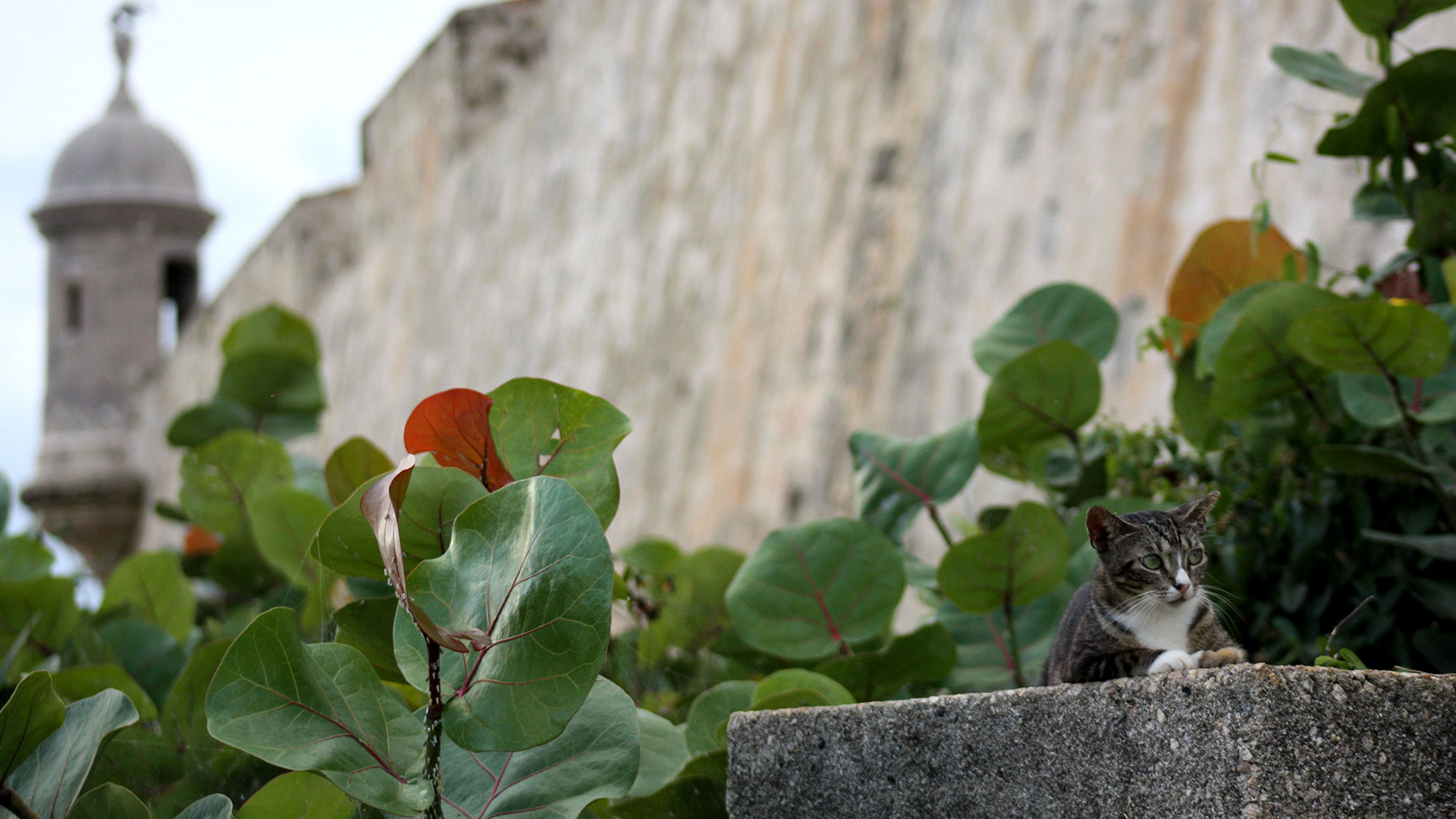
The cats hear the engine. They know the sound. And they come running from the rocks, the scrub brush, and the crevices in the old seawall. Dozens of them, materializing like ghosts in the golden light, because the people on that golf cart are the reason they are still alive.
This is Save A Gato.
If you have read about the cats of Old San Juan, you have probably encountered the name. But most articles mention Save A Gato the way they mention the weather, a passing detail in someone else’s story. Yet the organization deserves more than that. Indeed, it deserves its own story, because without these volunteers, the colony would not exist. Not the way it does now. Probably not at all.
How Save A Gato Began
It all started in 2004.
Save A Gato was founded in 2004. The cat population along the Paseo del Morro had grown to more than three hundred. The municipality had an animal control office, but it was overwhelmed and underfunded. No one was sterilizing the cats. No one was providing organized veterinary care. Meanwhile, cats were being abandoned in Old San Juan by owners who assumed, incorrectly and dangerously, that dropping a pet near the colony was the same thing as rehoming it.
So the organization was built, securing a formal agreement with the National Park Service to manage the cat colony on federal land, the only such agreement between a nonprofit and the NPS in the entire country. Then a growing group of volunteers got to work.
Their weapon was TNR.
What Save A Gato Actually Does
Trap, Neuter, Return, and Everything Else
TNR stands for Trap-Neuter-Return, and it is the foundation of everything Save A Gato does. The process works like this. First, volunteers humanely trap cats from the colony. Then the cats are transported to partner veterinary clinics, where they are sterilized, vaccinated against rabies, dewormed, tested for feline leukemia and FIV, and treated for any other medical issues. Feral cats, the ones who have never been socialized to humans and never will be, are then returned to their territory. Friendly cats and kittens go into foster care until they can be adopted, either through local PetSmart and Petco partner locations or through rescue alliances on the mainland United States.
Each TNR procedure costs approximately eighty-five dollars per cat. Save A Gato is a one-hundred-percent volunteer organization. Every dollar comes from donations. There is no municipal funding, no government grant, no endowment. Just people who care enough to show up.
Now, here is the part that matters most. Since 2004, Save A Gato’s TNR program has reduced the Paseo del Morro colony by approximately fifty percent. Specifically, the colony that once numbered more than three hundred cats is now closer to one hundred. That is not a guess. That is twenty years of trapping, sterilizing, and returning, day after day, cat by cat.
La Casita
Near the Paseo, there is a small building that serves as Save A Gato’s base of operations. Naturally, the volunteers call it La Casita, The Little House. It functions as a triage center for sick and injured cats, a nursery for kittens too young for adoption, and a temporary home for friendly adults waiting for a family. It is not a shelter. Save A Gato stresses this constantly, because the misconception that Old San Juan is a drop-off point for unwanted cats is one of the biggest problems the organization faces. Abandoning a domestic animal is a crime in Puerto Rico under Act 154, punishable by up to three years in prison. But people keep doing it anyway.
The Daily Routine
Volunteers visit the colony every single day. They bring fresh food and clean water to the feeding stations along the Paseo del Morro. Then they monitor individual cats for signs of illness or injury. New arrivals get noted, cats who were not there yesterday, who may have been dumped overnight, and the process of trapping and evaluating them begins. The ear tip is how you tell. If a cat’s left ear has been cleanly clipped at the tip, that cat has been through the Save A Gato TNR program. Essentially, it is vaccinated, sterilized, and accounted for. But if both ears are intact, that cat is new and needs to be trapped.
This happens every day. In summer heat. In hurricane season. On Christmas.
Hurricane Maria and What Came After
2017: When the Colony Nearly Broke
On September 20, 2017, Hurricane Maria made landfall in Puerto Rico as a high-end Category 4 storm. The damage was catastrophic across the island. In Old San Juan, the Paseo del Morro took a direct hit. Consequently, waves crashed against the seawall, scattering boulders and sand across the trail. The feeding stations were destroyed. The cats scattered.
And then the abandonment crisis began. In the months after Maria, as Puerto Rico struggled with power outages that lasted nearly a year, economic devastation, and a slow federal recovery, pet abandonment on the island surged. Ultimately, owners who could no longer afford to feed themselves could not feed their animals either. Cats were dumped in Old San Juan in growing numbers, because people believed, wrongly again, that Save A Gato would take care of them.
Of course the volunteers came back. Wanda Belaval and Efrain Corsino, both retirees, began volunteering three times a week specifically because of Maria. They were not alone. Others joined. They rebuilt the feeding stations, resumed the TNR schedule, and absorbed a wave of new cats into an already stretched operation.
And then the pandemic hit. More abandonment. More cats. But the same volunteers, still showing up.
The Fight with the National Park Service
2023–2026: A Colony Under Threat
For nearly twenty years, Save A Gato operated under a cooperative agreement with the National Park Service. Essentially, the NPS managed El Morro and the Paseo del Morro as part of the San Juan National Historic Site. Save A Gato managed the cats. The arrangement worked. Then, in August 2023, the NPS published a Free-Ranging Cat Management Plan proposing to remove the approximately two hundred cats from the Paseo.
The plan cited invasive species concerns, including impact on Puerto Rican ground lizards and migratory seabirds, and public health risks from parasites. It explicitly rejected TNR as insufficient. In the NPS view, the feeding stations maintained by Save A Gato actually attracted additional strays and even rats, making the problem worse rather than better.
Naturally, the community response was fierce. Save A Gato, Alley Cat Allies, and hundreds of residents pushed back. For the defenders, these cats are not invasive pests. They are the descendants of a colony that has existed since the Spanish colonial era, officially sanctioned by Mayor Felisa Rincón de Gautier in the mid-twentieth century. Removing them is not wildlife management. It is the erasure of living heritage.
The Lawsuit
In March 2024, Alley Cat Allies filed a federal lawsuit against the NPS in the United States District Court for the District of Columbia, arguing that the removal plan violated the National Environmental Policy Act. Save A Gato later joined as co-plaintiff. The lawsuit also challenged whether the NPS even had jurisdictional authority to act against cats on the Paseo del Morro.
The legal timeline since then has been dramatic. In August 2024, the NPS attempted to fast-track the removal, targeting an October 1 start date. Immediately, Alley Cat Allies filed for a temporary restraining order. The NPS backed down and agreed to halt all removal activity while the court decided the case. Then, in early 2025, Alley Cat Allies uncovered that the NPS had falsely certified its administrative record as complete, excluding hundreds of public comments, many from Puerto Rican residents opposing the plan. The judge vacated the briefing schedule to allow further review.
As of early 2026, the cats remain on the Paseo. No final ruling has been issued. The case is ongoing.
Why TNR Works, and Why It Matters
The Science Behind Save A Gato’s Approach
The NPS says TNR has failed. Save A Gato says the numbers tell a different story. The colony went from over three hundred cats to approximately one hundred since the program began. That is not failure. That is a fifty-percent reduction achieved entirely by volunteers with no government funding.
The science behind TNR is simple. If you remove cats from an area, a well-documented phenomenon called the Vacuum Effect kicks in. New, unsterilized cats from surrounding neighborhoods move into the now-empty territory, and the breeding cycle restarts from zero. Removal is not a solution. Instead, it is a reset button that guarantees you will have the same problem again within a few years, except now the new population is entirely unvaccinated and unmanaged.
On the other hand, TNR breaks the cycle. Sterilized cats hold territory but do not reproduce. Consequently, the population declines naturally through attrition. Meanwhile, the managed colony keeps unsterilized newcomers out, because cats are territorial and a stable colony resists new arrivals far more effectively than an empty one does.
This is not theory. It is the approach endorsed by the ASPCA, by Alley Cat Allies, and by animal welfare organizations worldwide. It is working in Save A Gato’s colony. Ultimately, the argument that it has failed is contradicted by the organization’s own two-decade track record.
The People Behind Save A Gato
Volunteers, Not Heroes (Though They Might Be Both)
One thing you should understand about Save A Gato is that nobody gets paid. This is a one-hundred-percent volunteer operation. Every donation goes directly to cat care: food, medicine, sterilization, and building upkeep for La Casita.
The volunteers come from everywhere. Some are retirees like Wanda and Efrain. Others are university students earning community service hours. You will find high school kids who show up with their parents, and tourists who came to Old San Juan on vacation, walked the Paseo, fell in love with a cat, and now send monthly donations from the mainland. Ana María Salicrup Cuello, the secretary of Save A Gato’s board of directors, has pointed out that the organization has supporters from around the world, people who have never visited Puerto Rico but who follow the cats on social media and contribute what they can.
What binds them is simple. They believe these cats have a right to live, and they are willing to do the work that belief requires. Not just the pleasant work of feeding kittens at sunset, but the hard work, like making sure they are being properly vaccinated and cared for.
How You Can Help Save A Gato
What the Cats Need Right Now
If this story matters to you, here is what you can do.
Donate. Save A Gato is a 501(c)(3) nonprofit, so your donation is tax-deductible. Every eighty-five dollars funds one complete TNR procedure: sterilization, rabies vaccination, FeLV/FIV testing, and deworming. But even smaller amounts matter too. Food, medicine, and cleaning supplies for La Casita are ongoing expenses that never stop.
Adopt. Save A Gato regularly has friendly cats and kittens available for adoption, both locally and through rescue partners on the mainland. Check their Instagram and Facebook pages for available cats, or email saveagatopr@gmail.com.
Volunteer. If you live in Puerto Rico or are visiting for an extended stay, Save A Gato always needs hands. Whether it is feeding shifts, cage cleaning, or socializing kittens for adoption, there is always something to do.
Speak up. Alley Cat Allies maintains an advocacy page for the San Juan cats with petitions, updates on the lawsuit, and ways to contact decision-makers. After all, the legal fight is ongoing, and public pressure matters.
Visit. Just walk the Paseo del Morro. Take photographs. Spend money at local businesses. Tell people about the cats of El Morro. The more visible the colony is as an economic and cultural asset, the harder it becomes for anyone to justify removing it.
Save A Gato and the World of the Books
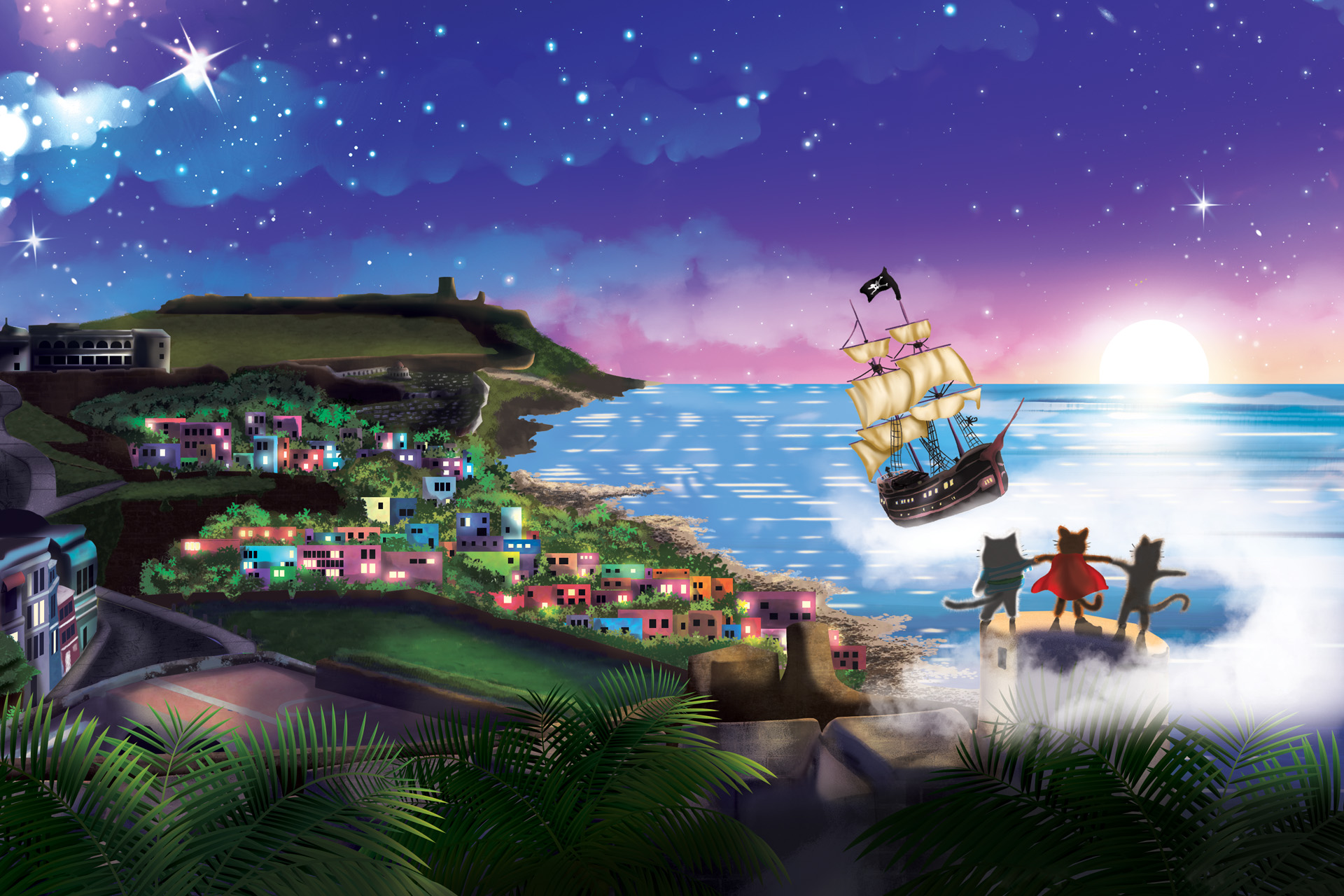
In The Cats of Old San Juan book series, the cats of El Morro have their own kingdom, their own history, and their own battles to fight. But the real battle, the one happening right now on the Paseo del Morro, in a federal courtroom in Washington, and in the daily routines of a handful of volunteers who refuse to walk away, that is the one that Save A Gato is fighting.
Naturally, the fictional cats have magic, pirate enemies, and a prophecy to guide them. The real cats have something better. They have people who show up. Every day. No matter what.
That is what Save A Gato is. Not an organization. Not a charity. A promise.
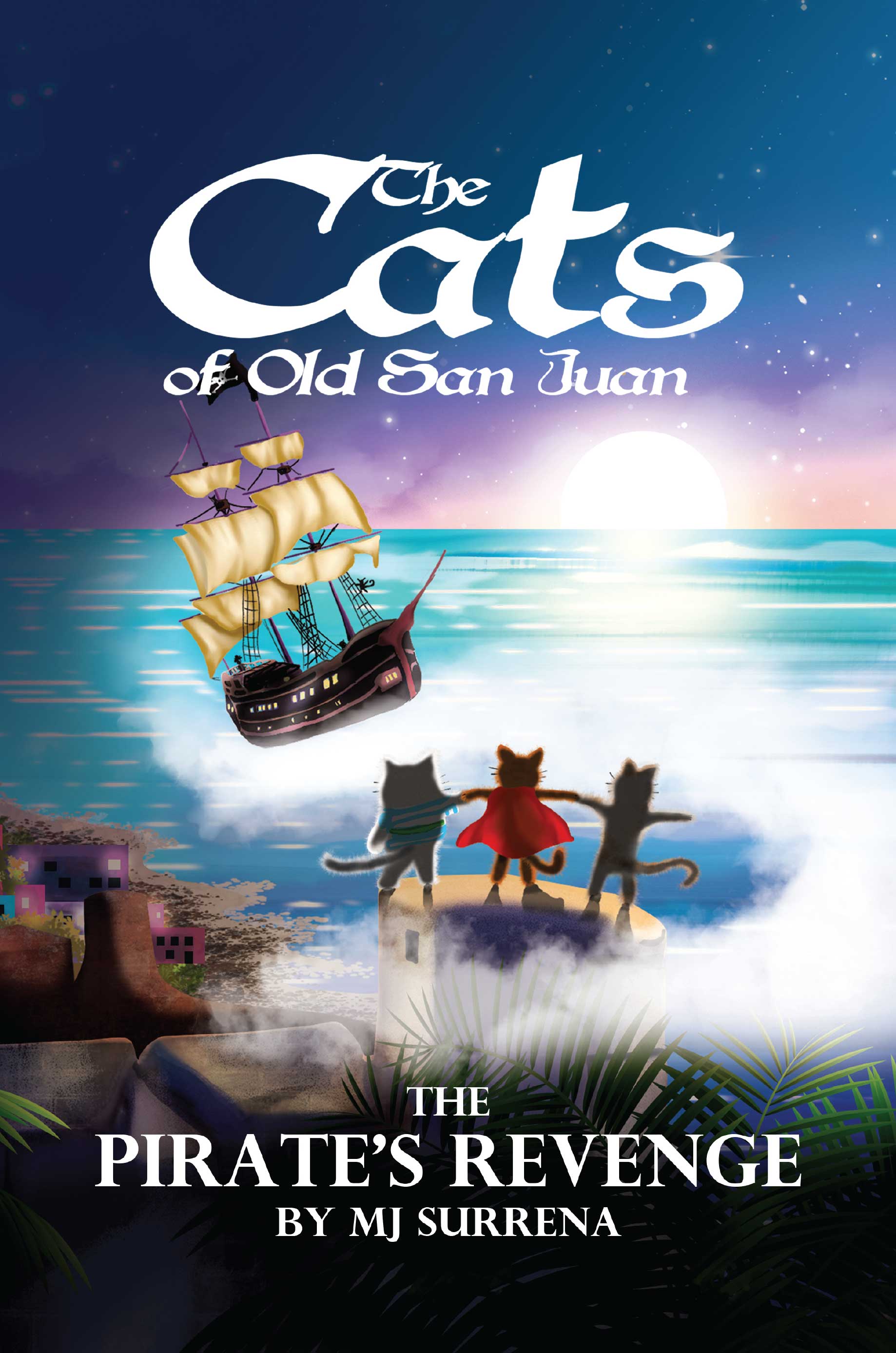
🐱 The spirit of the real colony lives inside the fictional world. The Pirate’s Revenge is the first book in The Cats of Old San Juan series, where three young cats discover that El Morro holds more secrets than anyone imagined. Signed hardcovers available.