
Click a location on the map to discover the recipes Rosana learned traveling around Puerto Rico.
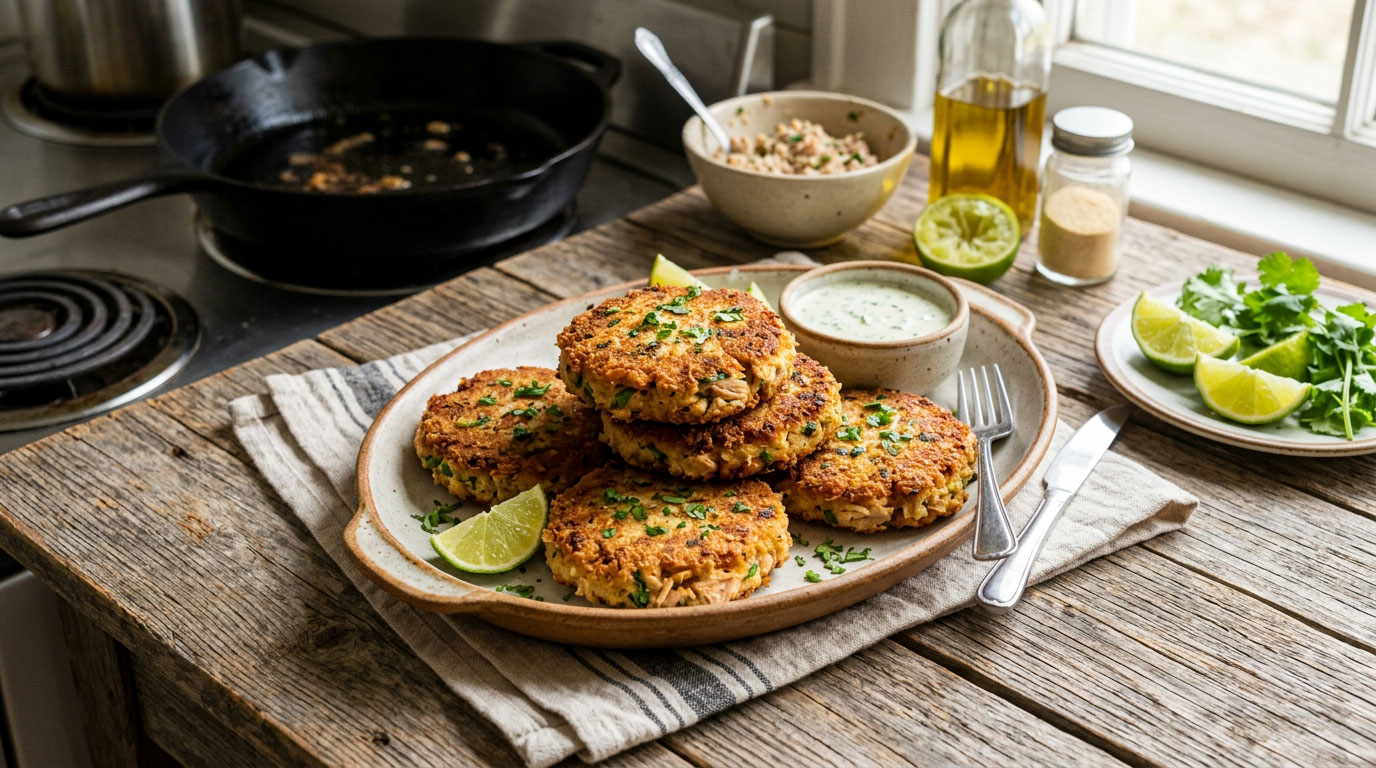
This recipe is Rosana’s own creation, born in the ancient kitchen deep inside El Morro. Castillo San Felipe del Morro is a massive stone fortress built by the Spanish starting in 1539 to protect San Juan Bay. Its walls rise six stories above the Atlantic. Today, real cats roam its ramparts and grassy fields, just like in the books.
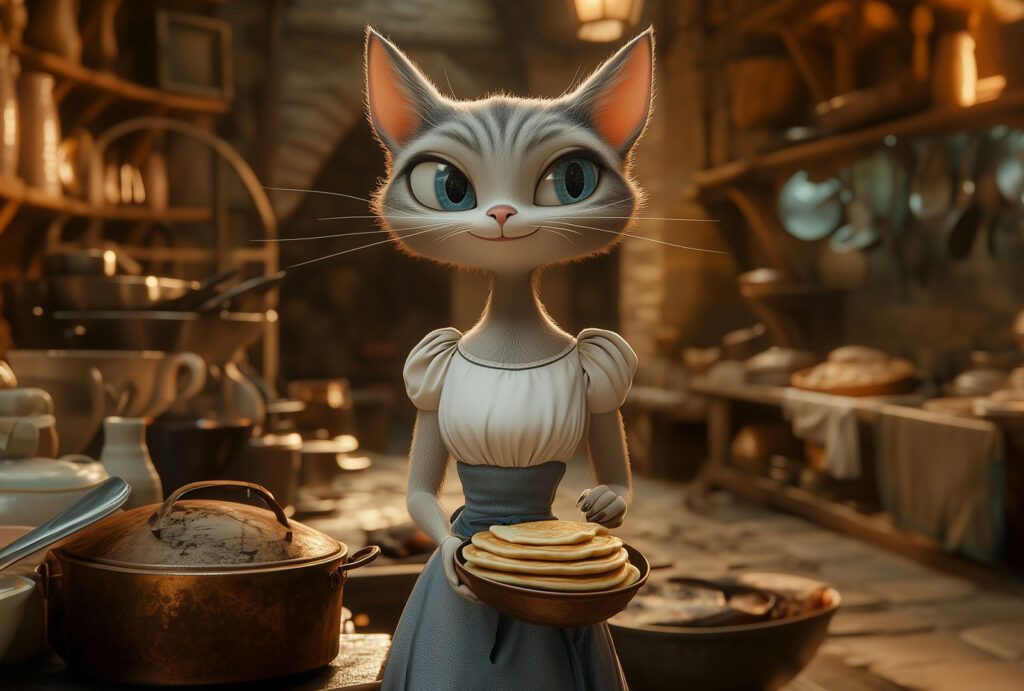
“Nana Rosana made tuna fish pancakes this morning. They were delicious!” — Major Mooch. Alfie packed some in his fanny pack, and they helped tame a monster in the catacombs.
“Drain the tuna well and don’t overmix — keep it light and the pancakes stay together. And always use a cast-iron skillet. It’s also useful if pirates show up.”
Kids mix and form patties — grown-ups handle the frying!
Tuna fish pancakes are Rosana’s own invention, and you won’t find them in any traditional cookbook! But tuna patties and croquetas de pescado are popular across the Caribbean, where cooks have always found creative ways to turn canned fish into something delicious. This is our best guess at what Rosana makes in her kitchen at El Morro. Try it and make it your own!
We added a touch of garlic for the human palate. Please note that garlic can be toxic to cats, and Rosana’s pancakes wouldn’t have included it.
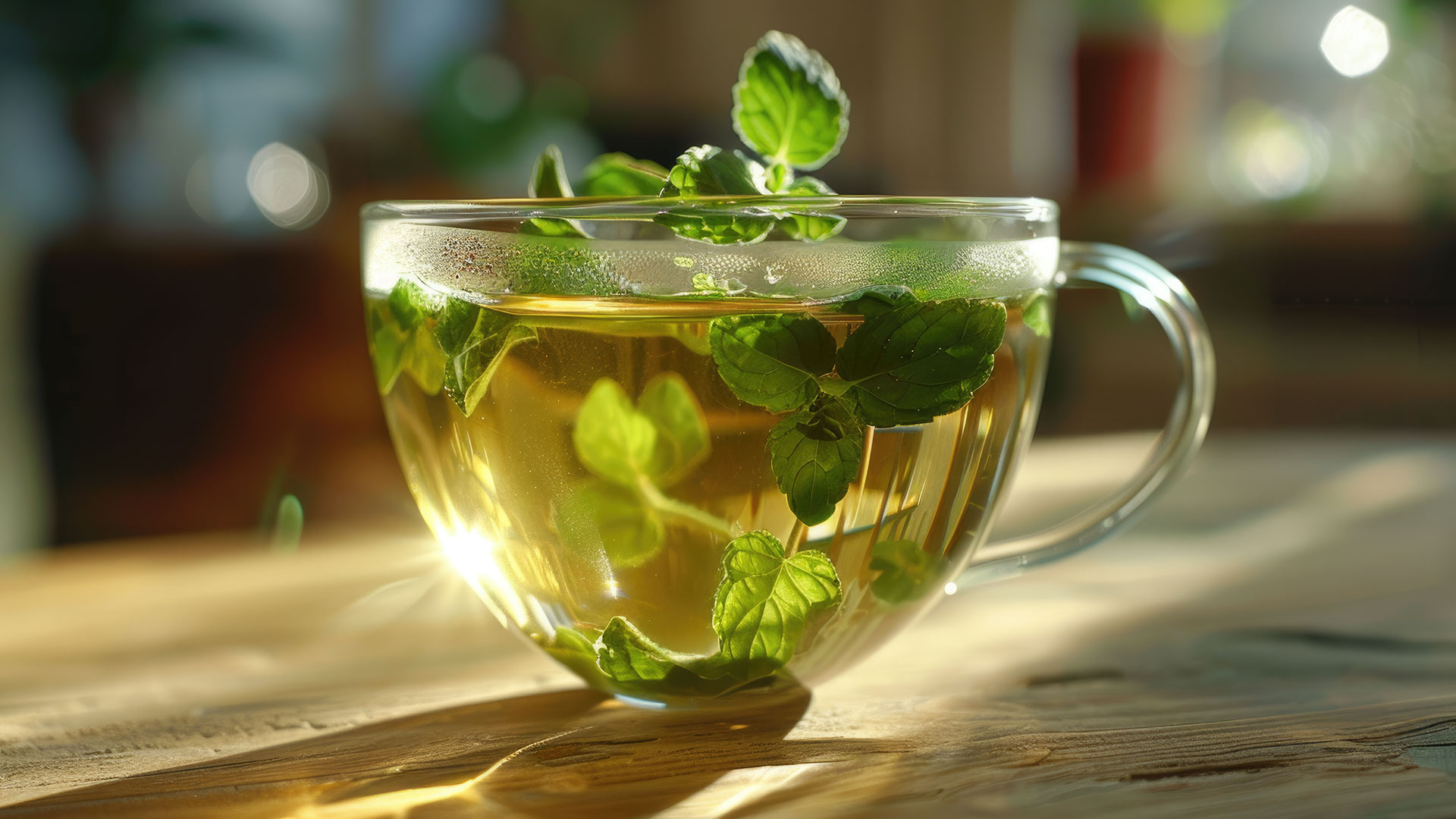
Pirate captain, swordsman, and connoisseur of catnip tea from across the world. Smuggler of vast renoun.

Catnip tea is the pirate drink aboard the Salty Sea Cat. It flows at every feast and celebration, loosens tongues at shadowy taverns, and has its own sea shanty: “Oh, catnip tea! Catnip tea! You make my life like a dream.” Even León keeps a stash in his workshop, though he insists his version is “mostly wheatgrass.” The Captain himself warns it’s “a very dangerous thing for most, but not for me.”
“A proper cup of catnip tea will loosen the tongue of your staunchest foe and make him say everything he thinks. So ye be careful and cautious all that drink for a tongue that goes a wagging soon regrets even the smallest bit of wag.”
Boiling water! Adults handle the kettle! Kids can measure the catnip, set the timer, and add honey.
Catnip tea is real! Humans have been brewing Nepeta cataria as an herbal remedy for centuries, long before the age of piracy. In colonial times, it was used to settle stomachs, ease headaches, and help with sleep. For humans, it’s a gentle, calming drink similar to chamomile. For cats, of course, it has a very different effect, which explains a lot about what happens aboard the Salty Sea Cat after a few rounds. You can find food-grade dried catnip at health food stores or online. Captain Kitty would approve.
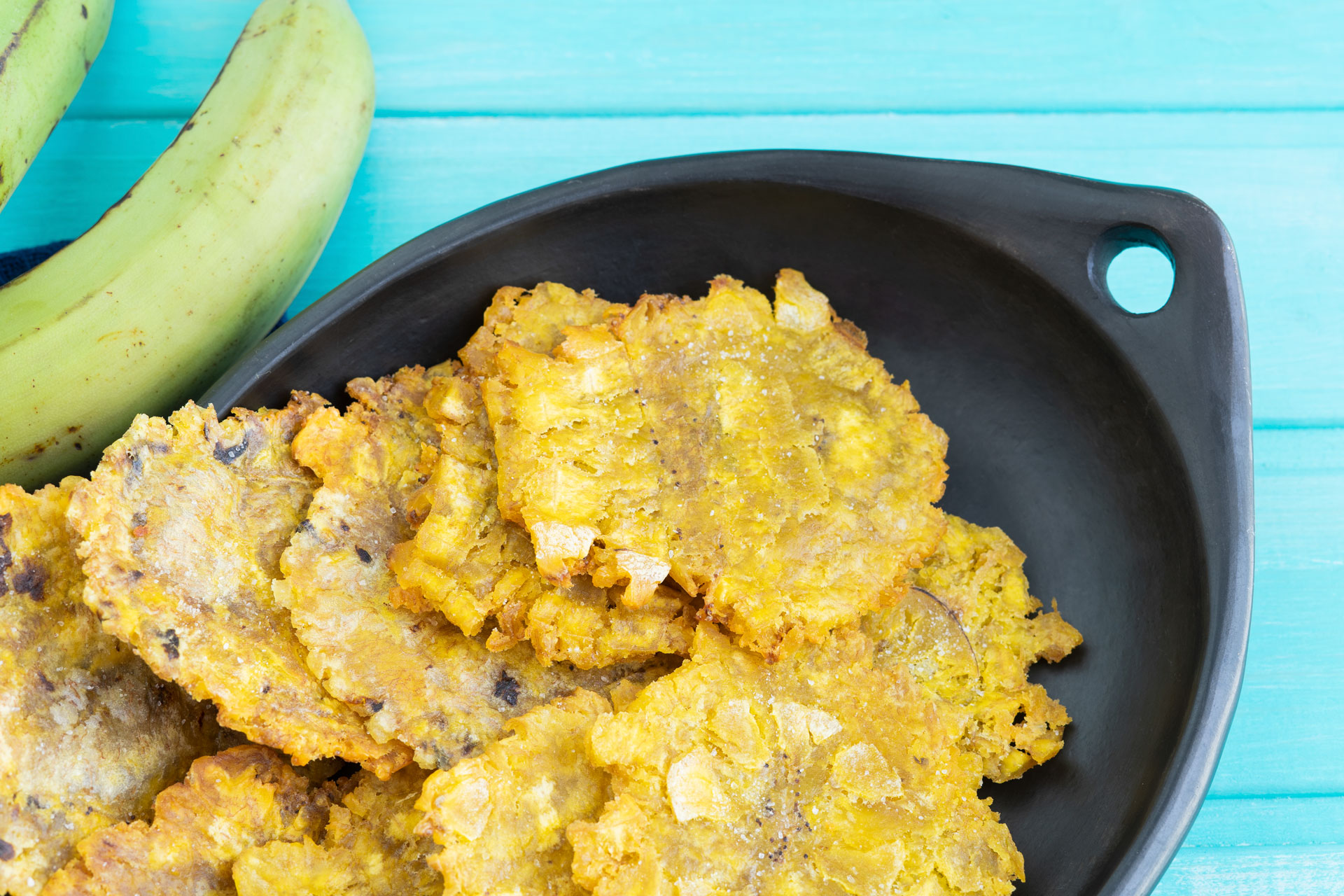
Learned from the cooks of Loíza, keepers of the double-fry tradition.
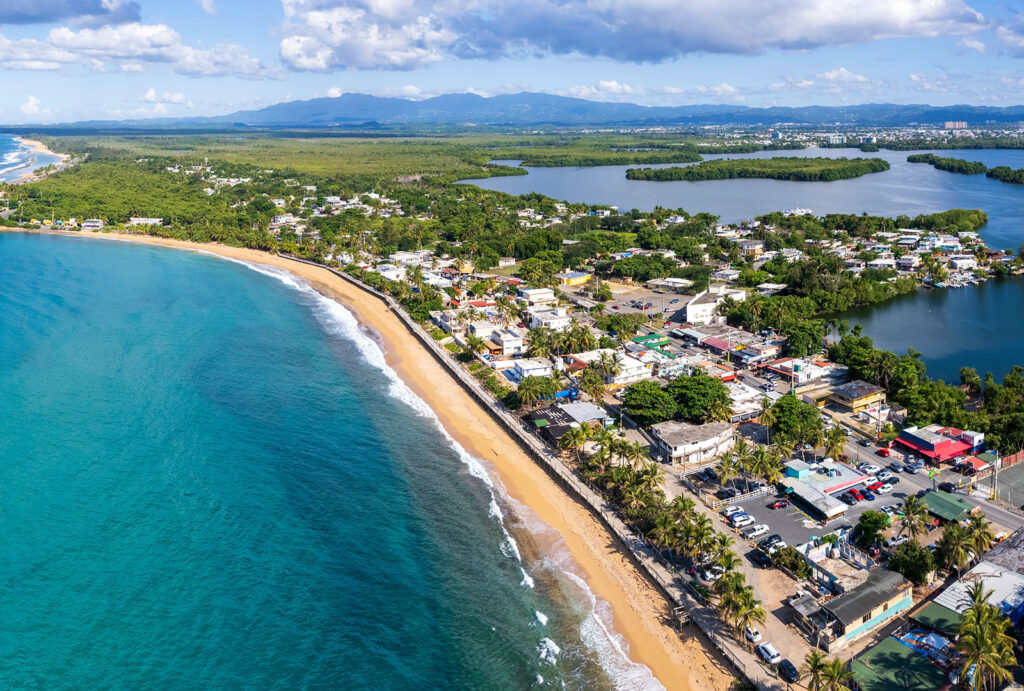
Every feast at the wall needs a side dish. These crispy, golden plantain coins look just like pirate treasure. It’s the kind of snack Major Mooch would munch while “guarding” El Morro.
“Pick the greenest, hardest plantains you can find — if they’ve turned yellow, save those for maduros! And the garlic water soak between fries is the real secret. Every Puerto Rican cook knows this.”
Hot oil! Grown-ups fry! Kids can peel, smash (the fun part!), dip, and season.
Tostones are a staple across the Caribbean and Latin America. They’re called patacones in Colombia and bannann peze in Haiti. In Puerto Rico, they come alongside almost every meal. The word “tostón” originally referred to a silver coin from colonial Spain, and that’s exactly what they look like! The tostonera, a wooden or metal press for flattening them, is a kitchen essential in every Puerto Rican home. Plantains were brought to the Caribbean by Spanish settlers from Southeast Asia and have been a staple ever since.
We added garlic to this recipe. Please note that garlic can be toxic to cats, and this recipe was modified specifically for human consumption.
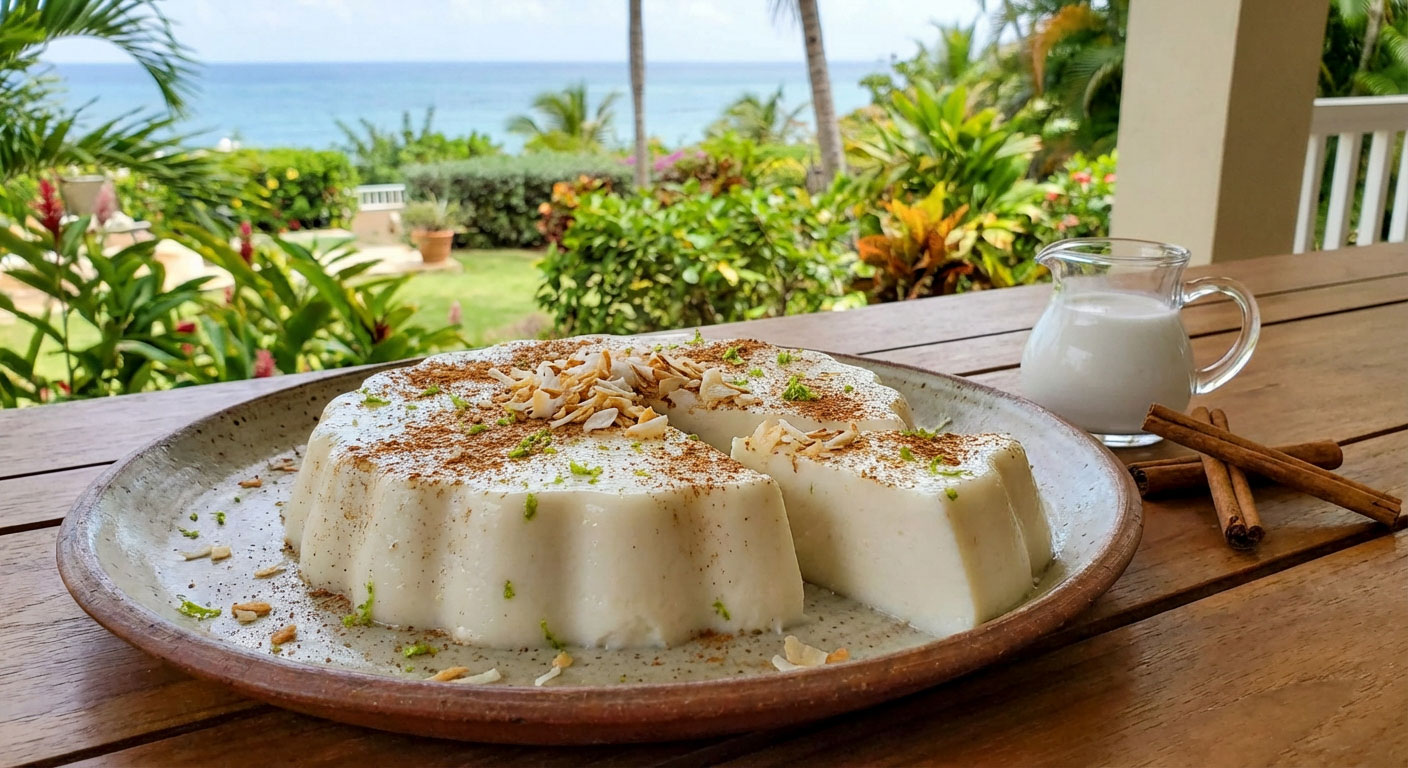
Rosana’s grandmother from Ponce, who made tembleque every Christmas and taught Rosana to feel when the spoon dragged just right
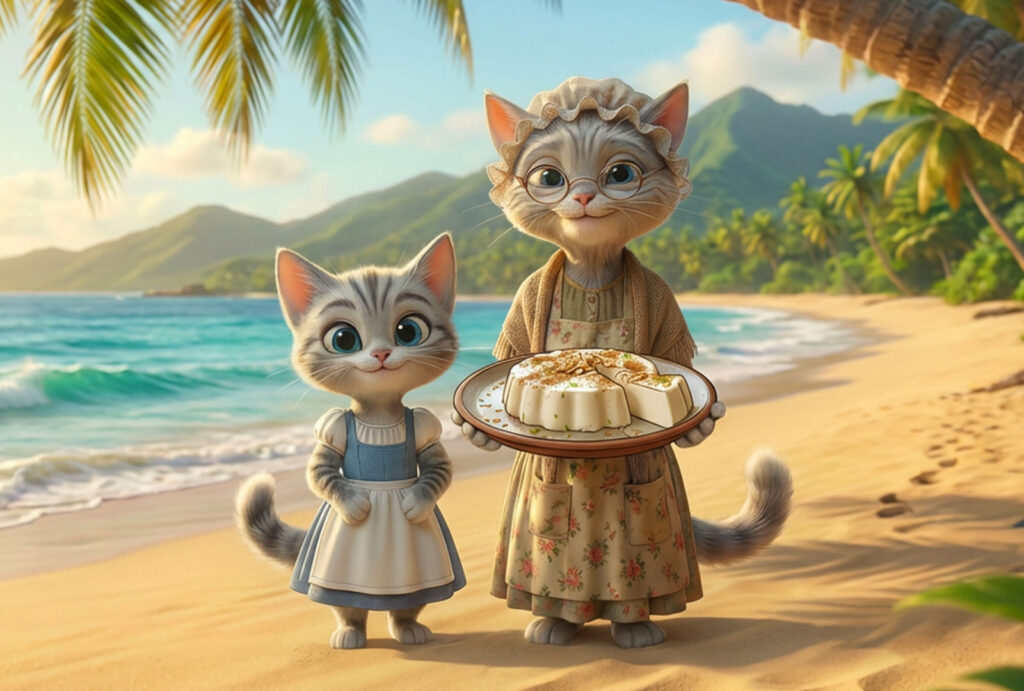
Rosana’s grandmother came from Ponce, the “Pearl of the South,” Puerto Rico’s second city on the Caribbean coast. Coconut palms line the shore there, and her abuela made tembleque every Christmas, pouring the warm coconut milk into molds and dusting each one with cinnamon. When Rosana was young, she would watch her grandmother stir the pot, learning to feel when the mixture was thick enough by the way the spoon dragged. It’s a recipe filled with fond memories. Her grandmother lives far away, but Rosana relives these memories every time she makes tembleque.
“Start mixing the cornstarch into the coconut milk while the pot is still cold. That’s the secret to a perfectly smooth tembleque with no lumps. And ‘tembleque’ comes from the Spanish word temblar, to tremble! Kids love watching it wiggle.”
The mixture gets very hot. Kids can measure, whisk the cold mixture, pour into molds, and the best part: dust with cinnamon and watch it jiggle!
Tembleque (pronounced tehm-BLEH-kay) is one of Puerto Rico’s most beloved desserts, served especially at Christmas and New Year’s. Its roots trace back to colonial times, blending Spanish culinary traditions with the coconut that grows abundantly on the island. Every family has their own version. Some add orange blossom water, some use coconut cream for extra richness. It’s naturally dairy-free and gluten-free. Similar coconut puddings appear across the Caribbean and as far as the Philippines (maja blanca), showing how food traditions connect us across oceans.