The African Roots of Puerto Rico’s Favorite Side Dish
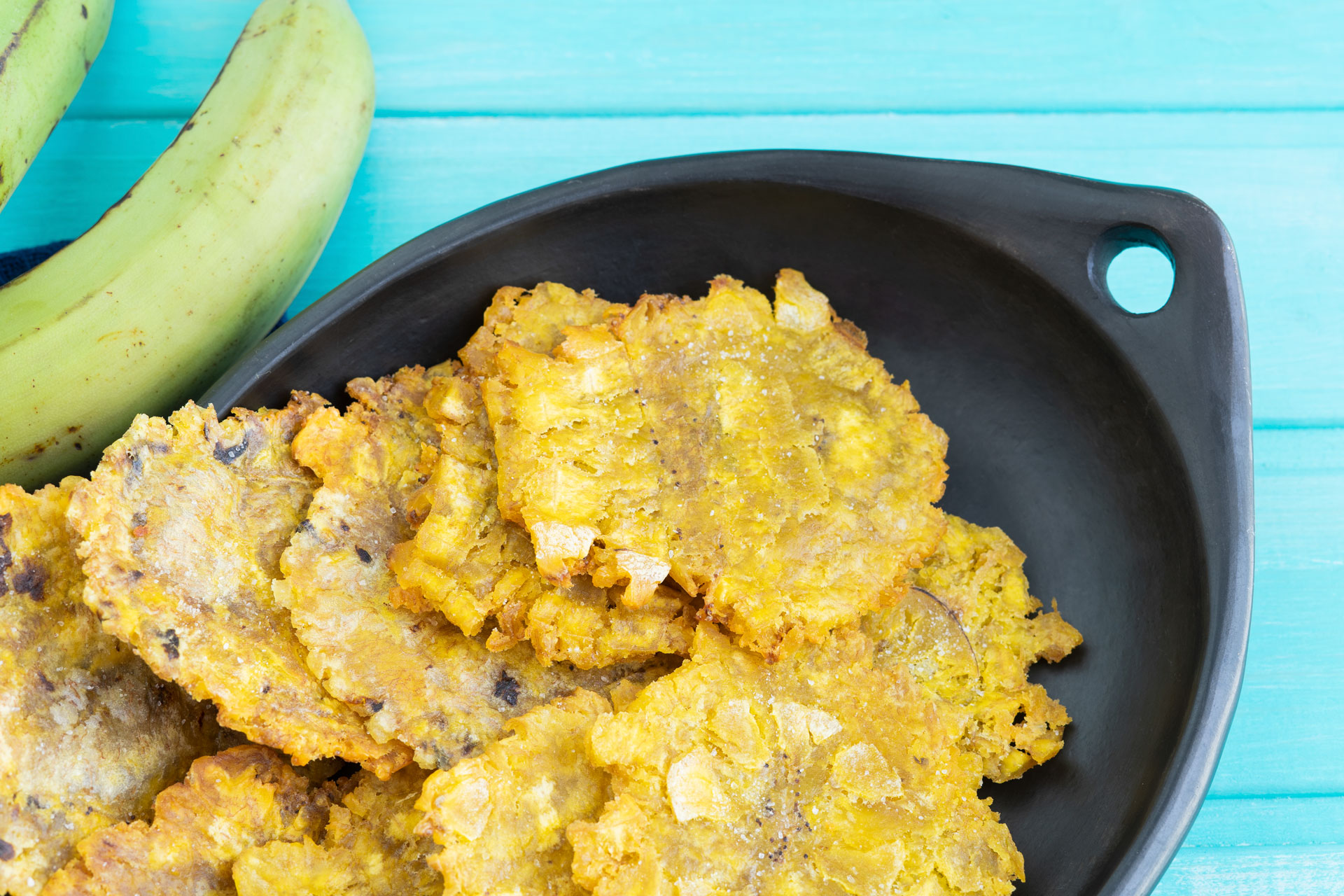
There is a moment, somewhere between the first fry and the second, when a toston is just a soft, golden disc of plantain sitting on a cutting board waiting to be smashed flat. It’s not done yet. It’s not crispy. It doesn’t look like much. But if you grew up eating tostones in Puerto Rico, you know that moment is where the magic happens, because you’re about to hit it with a tostonera (a hinged wooden press made for flattening plantains), drop it back in the oil, and turn a humble piece of fruit into something that people have been fighting over at dinner tables across the Caribbean for 500 years.
The double-fry is the whole point. You cook it once to soften it. You smash it to expose the starchy interior. Then you cook it again, and the outside goes crisp and golden while the inside stays warm and tender. It is one of the simplest techniques in all of cooking, and it traces back to West Africa, through the slave ships, through the sugarcane fields, and into every kitchen, food kiosk, and roadside shack on this island.
This is the story of tostones, the town of Loíza, and the African culinary traditions that shaped Puerto Rican food into what it is today.
From Southeast Asia to the Caribbean
Plantains are not native to the Americas. They originated in Southeast Asia, spread through Africa over thousands of years, and arrived in the Caribbean in 1516, carried from the Canary Islands by a Spanish friar named Tomás de Berlanga who planted them on the island of Hispaniola. From there, plantains spread rapidly throughout the Caribbean, thriving in the tropical climate. They grew fast, produced abundantly, and became a cheap, reliable food source for the inhabitants.
But the plantain’s arrival was only half the story. The fruit was here, growing in the heat and rain. What turned it into tostones was technique, and that technique came from Africa.
The African Double-Fry
Africans from West and Central Africa brought culinary knowledge that transformed Caribbean cooking. The practice of deep-frying starchy foods, which is now one of the defining characteristics of Puerto Rican cuisine, has its roots in these cooking traditions. Frituras, the crispy fried snacks sold at kiosks across the island, also descend from this tradition. So does mofongo, Puerto Rico’s most famous dish, which evolved from the West African fufu, a pounded starch made from yams or cassava.
The double-fry method used for tostones likely also draws from these same African cooking traditions. Frying a starchy vegetable once softens it. Smashing it flat and frying it again creates a texture that is impossible to achieve any other way: crunchy and crisp on the outside, soft and pillowy on the inside. The technique was adapted to work with plantains which had come to grow in abundance on the island.
The name “tostones” itself has two possible origins. It may come from the Spanish word tostar, meaning to toast. Or it may be named after the tostón, a Spanish colonial coin, because a smashed and fried plantain disc looks remarkably like a large gold coin. I prefer the second explanation. There is something fitting about a food born from deprivation being named after treasure.
Loíza: The Capital of Traditions
If you want to understand where tostones in Puerto Rico come from, both the food and the culture, you go to Loíza.
Loíza sits on the northeastern coast, about twenty minutes east of San Juan. It was settled in the 16th century by members of the Yoruba people, brought from what is now Nigeria, Benin, and Togo. Today, Loíza has the largest Afro-Puerto Rican population of any municipality on the island, and its music, art, dance, and food appear everywhere. The town is known as “The Capital of Traditions,” and that title is earned.
The culinary heart of Loíza is Piñones, a beachside community strung along Road 187 where food kiosks sell frituras by the plateful. Bacalaítos, alcapurrias, empanadillas, and tostones come out of the oil golden and hot, served on paper plates with cold beer and the sound of the ocean. El Burén de Lula, a small restaurant in Loíza run by María Dolores “Lula” de Jesús for decades, has been recognized by the James Beard Foundation for its traditional cuisine that fuses African and Taíno influences. This is cooking that carries centuries of history in every bite.
Bomba, Resistance, and the Kitchen
Food in Loíza is inseparable from the broader Afro-Puerto Rican culture that produced it. Bomba, one of the oldest surviving musical traditions on the island (if not the oldest, much of the Taino music has been lost), was also born in Loíza. It is a dialogue between a dancer and a drummer, where the dancer’s feet direct the rhythm. It served as communication, spiritual practice, protest, and celebration. It is still performed today, and when you watch it, you can feel the weight of the emotion and history that it carries.
The kitchen was another space of resistance and creativity. Enslaved people were given limited rations, often just the cheapest cuts of pork and whatever could be grown in small plots. From those constraints came extraordinary inventions. Mofongo combined the African tradition of pounding starchy vegetables with the plantains available in the Caribbean and the pork scraps from the plantation. Pasteles, often called Puerto Rico’s tamales, wrap seasoned masa and meat in banana leaves. These aren’t just recipes. They are evidence of people who refused to let deprivation strip away their skill, their culture, or their dignity.
Tostones fit right into that tradition. Take a cheap, abundant fruit. Apply a technique perfected across generations. Turn it into something golden and wonderful. It is food as an act of defiance, even if nobody thinks of it that way when they’re eating them at a beach kiosk in Piñones on a Saturday afternoon. The history is still there in every bite, whether you know it or not.
Golden Treasure Tostones
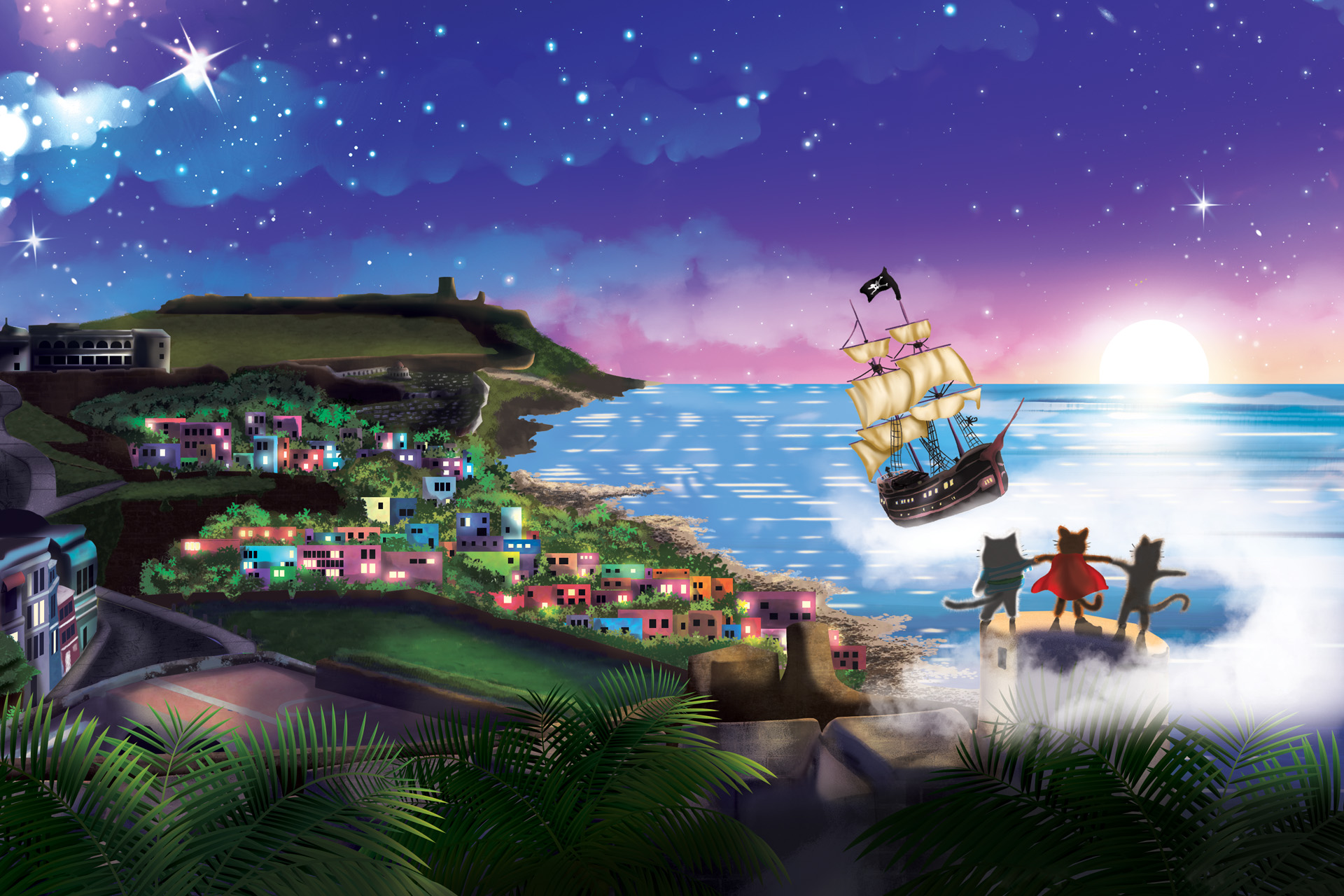
In the Cats of Old San Juan series, Rosana serves tostones as part of her regular rotation in the El Morro kitchen. Yes, cats are obligate carnivores, but Rosana isn’t a nutritionist, and a little fiber never hurt anyone. She calls her version Golden Treasure Tostones, because everything in a cat kingdom deserves a dramatic name, and because a toston really does look like a pirate’s gold coin when it comes out of the oil.
The human version of the recipe uses garlic water for the soak between fries, which is traditional (and because it is delicious). The garlic infuses the starch during the smashing step, so when the toston hits the oil for the second time, it carries flavor all the way through. Garlic isn’t good for cats, so Rosana usually skips this step.
In the books, you will read about a wide range of cooking techniques, from the great El Morro kitchen to aboard pirate ships. It’s all different and unique to the time period. The royal kitchen serves fried grouper with silvervine, roast pork, and mountains of seafood. The pirate galley serves something that looks like wet cement. Tostones bridge both worlds. They’re simple enough for a ship’s cook and elegant enough for a king’s table.
You can find the full recipe for Golden Treasure Tostones on the Rosana’s Kitchen page at catsofoldsanjuan.com, with a printable bilingual recipe card and a spot on the trail map.
More Than a Side Dish
Plantains are one of the most important crops in Puerto Rico, a $42 million industry according to the USDA, even as 85% of the island’s food is imported. That staying power says something. Tostones in Puerto Rico are not a novelty or a tourist attraction. They are breakfast, lunch, dinner, and a snack. They are the thing your abuela makes without measuring anything. They are the side dish that comes with everything from fried fish to lechón to a plate of rice and beans.
They are also, if you follow the thread all the way back, a piece of West Africa that survived the Middle Passage, adapted to a new continent, and became so embedded in Caribbean culture that most people don’t think about where they came from anymore. Loíza remembers. The drums in Piñones remember. The oil in the pan remembers, every time you drop in a smashed disc of plantain and wait for it to turn to gold.
What Comes Next
In the last post, we explored the terrible food pirates ate at sea. This time, we followed the plantain from Southeast Asia to West Africa to a food kiosk in Loíza. Next up: tembleque, the trembling coconut pudding, and the southern coast traditions that give it its name. If you’ve ever wondered why a dessert would choose to wobble, that one’s for you.
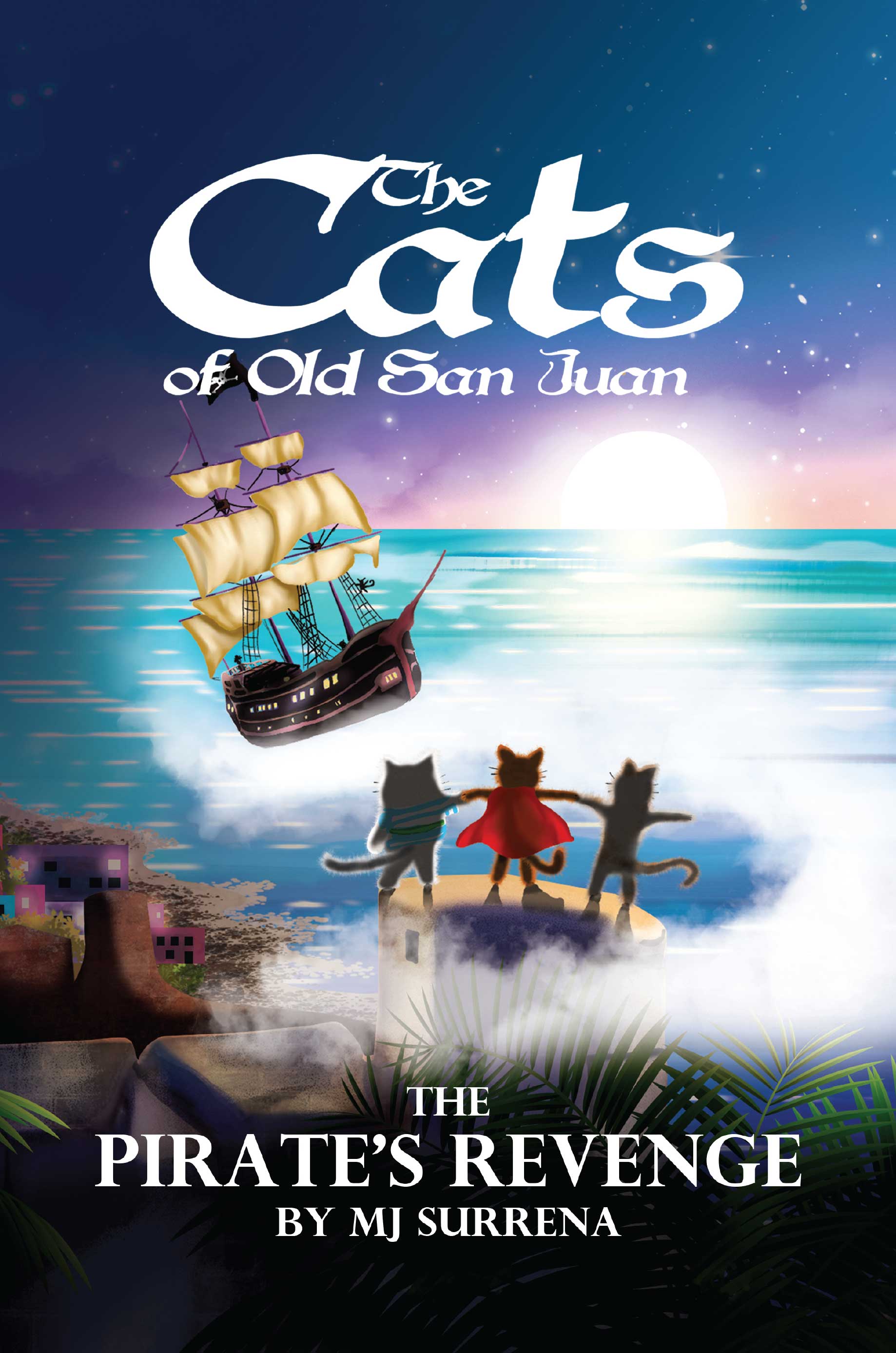
🐱 Rosana’s Golden Treasure Tostones are just one of the recipes from the secret cat kingdom inside El Morro. Discover where it all begins in The Pirate’s Revenge, the first book in The Cats of Old San Juan series. Signed hardcovers with full-color illustrations are available!