The Terrible, Weevil-Infested Truth About Pirate Food
If you’ve ever watched a pirate movie, you’ve probably seen a table groaning with roasted meats, overflowing goblets of wine, and exotic fruit spilling out of bowls, along with feasting pirates covered in gravy and laughing by candlelight on their majestic frigates. It’s a wonderful image, chock full of adventure and piratey mythos perpetuated by Hollywood, romance novels, and video games. While I was writing the series, I earnestly wished it was all true. But it isn’t.
The truth about what pirates ate at sea during the Golden Age of Piracy is considerably less appetizing. Their diet consisted mainly of salted meat so tough that sailors carved it into buttons, biscuits so hard they could crack your teeth, and water so foul that rum was added just to make it drinkable. Fresh food lasted days at best in the Caribbean heat. After that, you ate what survived.
In my books, a pirate cook named Withers runs the galley on the Salty Sea Cat, and his food is so bad the crew was planning to maroon him. Understanding what a real ship’s cook had to work with makes you appreciate both Withers’s struggle and the miracle that anyone survived long enough to become a famous pirate at all.
Hardtack: The Biscuit That Wouldn’t Die
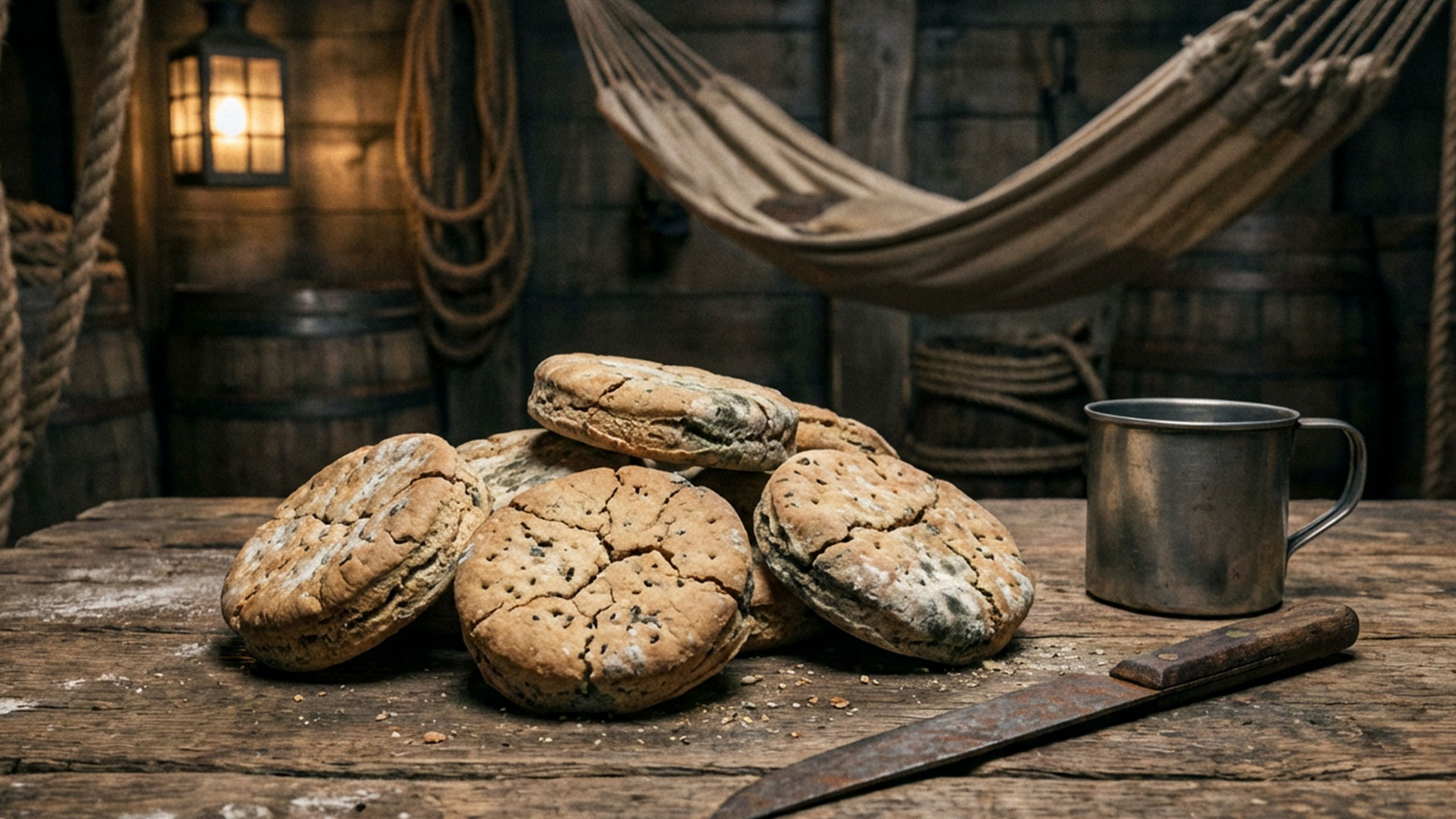
The most iconic food in any pirate’s diet was hardtack, also called ship’s biscuit. It was made from flour, water, and sometimes a pinch of salt, then baked multiple times until every trace of moisture was gone. The result was a dense, flat cracker with the texture of a roof tile and roughly the same flavor.
Hardtack’s only virtue was that it lasted. A properly baked biscuit could survive months at sea without spoiling, which made it invaluable on long voyages where fresh bread would turn to mold within days. Sailors soaked it in water, broth, or rum to make it chewable. Some crushed it into a powder and stirred it into stew. Others just bit down hard and accepted the consequences.
Another problem was the weevils. On any voyage longer than a few weeks, the biscuits became infested with small beetles that burrowed inside and laid their eggs. Experienced sailors learned to tap the hardtack against the table to knock the bugs loose before eating, or to eat in the dark so they didn’t have to see what they were chewing. Some simply ate the weevils, reasoning that the extra protein was a benefit.
In The Cats of Yore (Book 4), Withers describes hardtack to Alfie as something “no cat should eat, but it tamps down hunger ’cause it glues your guts together.” This is not far from the historical reality. If you want to see what hardtack actually looks and tastes like, Tasting History made a batch
Salt Meat: Tough as Shoe Leather & Just as Tasty
After hardtack, the next staple in a pirate’s diet was salted meat. Pork and beef were preserved in barrels of brine so concentrated that the meat could last for months. The salt drew out moisture and prevented bacteria from growing, but it also turned the meat into something resembling shoe leather. According to National Geographic, dried beef became so hard that sailors would carve it into buttons and belt buckles rather than attempt to eat it. At least they could use it for something…
When the cook did serve it, the meat had to be soaked in water for hours to extract the excess salt, then boiled until it was soft enough to chew. The result was stringy, gray, and tasted of brine. Herbs and spices helped disguise the flavor when they were available, but on many ships, pepper and mustard seed were luxuries reserved for the captain’s table.
Pirates had one advantage over navy sailors when it came to meat. They could raid coastal settlements for fresh livestock, and Caribbean waters offered abundant sea turtles, which weighed 300 pounds or more and tasted something like chicken (I’m told). The buccaneer Alexander Exquemelin, who sailed with the buccaneers and wrote extensively about their turtle-hunting, noted that the meat was so prized that crews would turn hundreds of turtles on Caribbean beaches.
The Ship’s Cook: A Dangerous Job
If you’re wondering what pirates ate and who prepared it, the answer is usually the least capable fighter on board. The ship’s cook was often a wounded or disabled crew member who could no longer haul ropes or fire cannons. He cooked over an open hearth on a wooden ship, which was exactly as dangerous as it sounds. The galley, called the cookroom, was typically a cramped space on the lower deck with a brick or stone firebox, a chimney that rarely drew properly, and barrels of ingredients rolling around with the waves.
Fire on a wooden vessel surrounded by gunpowder was every captain’s nightmare. The cook had to keep the hearth contained while the ship pitched and rolled, and a single accident could sink the entire vessel. This is why Withers warns Alfie in the books that “the galley be a dangerous place. Fire and smoke on a wooden vessel listing back and forth on the rolling waves? Everything be anchored down, and a watchful eye be kept on the fire at all times.”
The cook’s typical output was a stew or porridge made from whatever was available. A dish called burgoo, made from oats, grains, and whatever meat or fish could be thrown in, was common on English ships. In the Caribbean, cooks had access to local ingredients when the ship was in port: plantains, coconuts, tropical fruits, peppers, and fresh fish. These brief periods of real food made the return to hardtack and salt pork even more miserable.
Salmagundi: The Pirate Salad
The closest thing pirates had to a proper meal was salmagundi, a dish that deserves its own paragraph because it was genuinely creative. Salmagundi was a catch-all mixture of whatever the cook could find: chopped turtle meat, fish, pork, chicken, corned beef, ham, and pigeon, all roasted and marinated in spiced wine, then combined with cabbage, anchovies, pickled herring, mangoes, hard-boiled eggs, palm hearts, onions, olives, grapes, and whatever pickled vegetables were on hand. The whole thing was seasoned heavily with garlic, salt, pepper, and mustard seed, then soaked in oil and vinegar.
It sounds chaotic because it was. The word “salmagundi” comes from the French salmigondis, meaning something like “hodgepodge,” and the dish was essentially a pirate’s way of making something that tasted like a real meal out of ingredients that individually ranged from stale to suspicious. When it worked, it was apparently quite good. When it didn’t, you had a pile of pickled things in vinegar. Either way, it was better than plain hardtack.
Rum: The Only Thing That Kept Them Going
Fresh water spoiled quickly in wooden casks, turning slimy and green within weeks. Beer lasted longer but eventually went flat and sour. Rum, distilled from Caribbean sugarcane and molasses, kept indefinitely and was cheap to produce. By the mid 1700s, Barbados alone was exporting hundreds of thousands of gallons of rum per year, and much of it ended up on pirate ships.
Pirates tested the strength of their rum by pouring a sample over gunpowder and lighting it. If the powder ignited, the rum was strong enough to sell. The rum they drank was well above 50% alcohol, which is significantly stronger than anything you’d find in a modern bottle. This may explain why Calico Jack Rackham was ultimately captured because he and his entire crew were too drunk to flee or fight when the Navy arrived.
The practice of mixing rum with water produced grog, which served the dual purpose of killing the taste of stale water and giving sailors something to look forward to in an otherwise bleak diet. In my books, the pirates drink catnip tea instead of rum, but it serves the same purpose. It’s the thing that keeps morale from collapsing entirely. Withers’s little cooking song mentions both “a drop of rum” and “hair of the dog when supper comes,” because a pirate galley runs on both fire and alcohol.
Withers and the Crab Bisque
When Alfie first enters the galley of the Salty Sea Cat in The Cats of Yore (Book 4), Withers is stirring a stew that looks like “hot, bubbling wet cement.” Little fish heads pop out gasping for breath before sinking back in. This is not exaggeration. A real pirate stew made from whatever the cook had left would have looked and smelled roughly like that.
What makes the scene work is what happens next. Alfie, who has learned to cook from Rosana, teaches Withers to make a crab bisque with coconut, calabaza, cream, and catnip. The pirates are stunned. The Captain tastes it and says it’s wonderful. Withers is saved from the gallows.
The joke underneath the comedy is historically accurate. A real ship’s cook who could produce something better than boiled salt meat and weevil biscuits would have been genuinely valuable. Good food meant better morale, healthier crew, and fewer complaints. Some captains understood this. Resourceful pirate cooks who could mask the staleness and saltiness of rations with herbs and spices from port stops were prized crew members. Others, like Withers before Alfie arrived, were just trying not to poison anyone.
Try Captain Kitty’s Catnip Tea
You can find the recipe for Captain Kitty’s Catnip Tea on the Rosana’s Kitchen page at catsofoldsanjuan.com. It’s the drink that fuels every pirate celebration in the books, from the feasts at El Morro to the late nights on the quarterdeck. The recipe is bilingual (English and Spanish), with a printable recipe card.
It won’t make your water drinkable or keep weevils out of your biscuits, but it’s considerably more pleasant than anything a real pirate ever drank at sea.
What Comes Next
In the last post, we explored what they ate inside El Morro. This time, we followed the food out to sea and discovered why Withers nearly got marooned. Next up: the story of tostones, Loíza’s double-fry tradition, and the African roots of one of Puerto Rico’s most beloved side dishes. If you’ve ever wondered why you fry a plantain, smash it, and fry it again, that one’s for you.
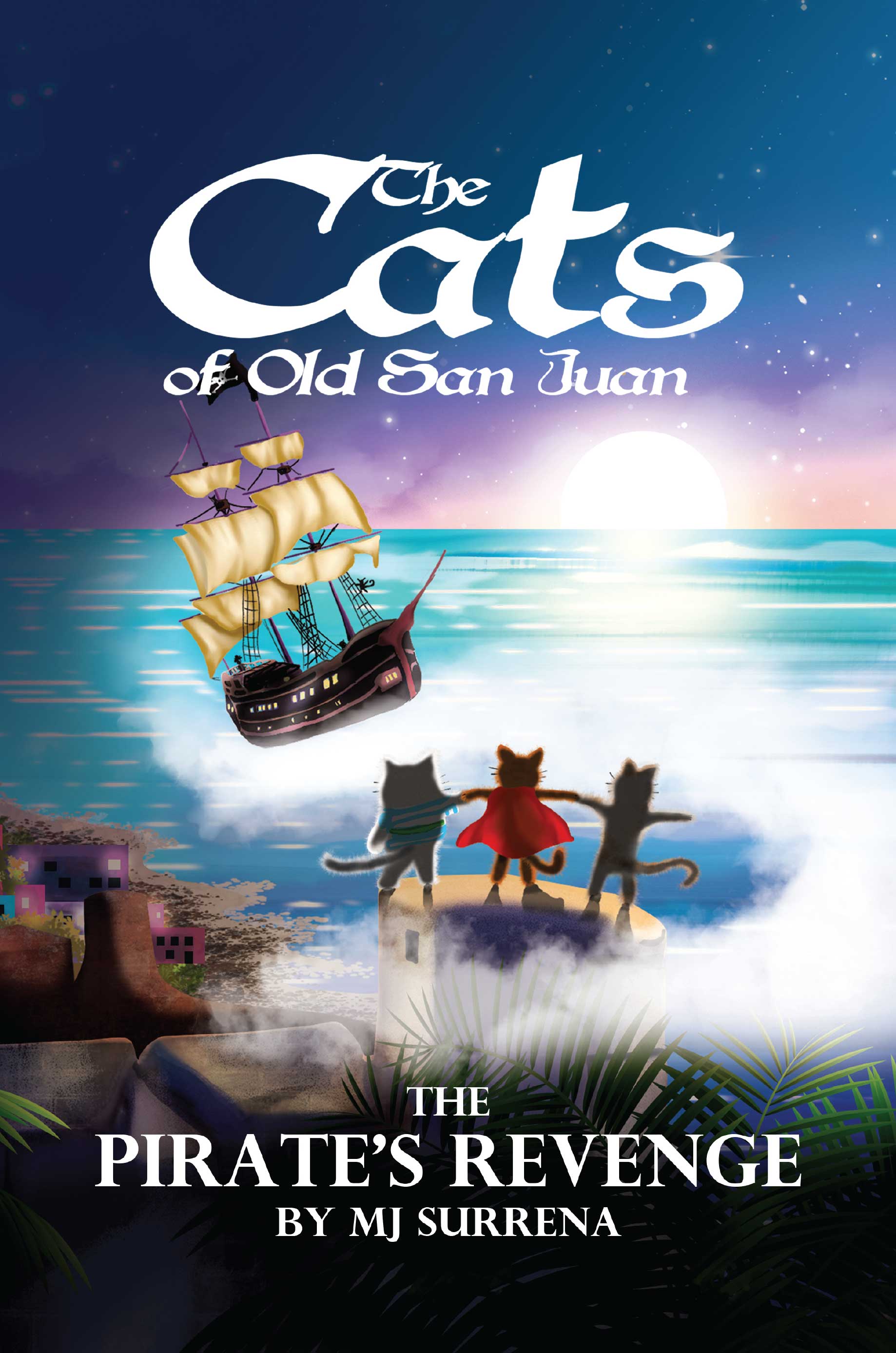
🏴☠️ Withers, Alfie, and the crab bisque that saved a pirate’s life are all in The Cats of Old San Juan book series. Signed hardcovers with full-color illustrations available for The Pirate’s Revenge!